Engineering Projects
A selection of engineering projects across mechatronics, electrophysiology, biosignal instrumentation, computational fluid mechanics, medical AI, and cellular therapeutics.
Smart Stove Safety Knob
CREATE-X Startup Accelerator • Georgia Institute of Technology
Fail-safe retrofit device that automatically shuts off unattended stovetops. Spring-loaded ratchet mechanism stores mechanical energy when user turns knob ON; if PIR detects no presence, dual servos release the spring — driving the knob back to OFF. Works on gas & electric, tool-free install, sub-$50 BOM.

Smart Stove Safety Knob
Wearable Forearm Sensor Cuff: Tremor & Autonomic Stress Biomarkers
Georgia Institute of Technology
Continuous forearm sensor cuff integrating surface EMG and GSR to quantify sympathetic stress impact on neurogenic tremor. Validated across 10 patients (5 trials each), demonstrating significant inverse correlation (p = 0.041, R² = 0.4266).
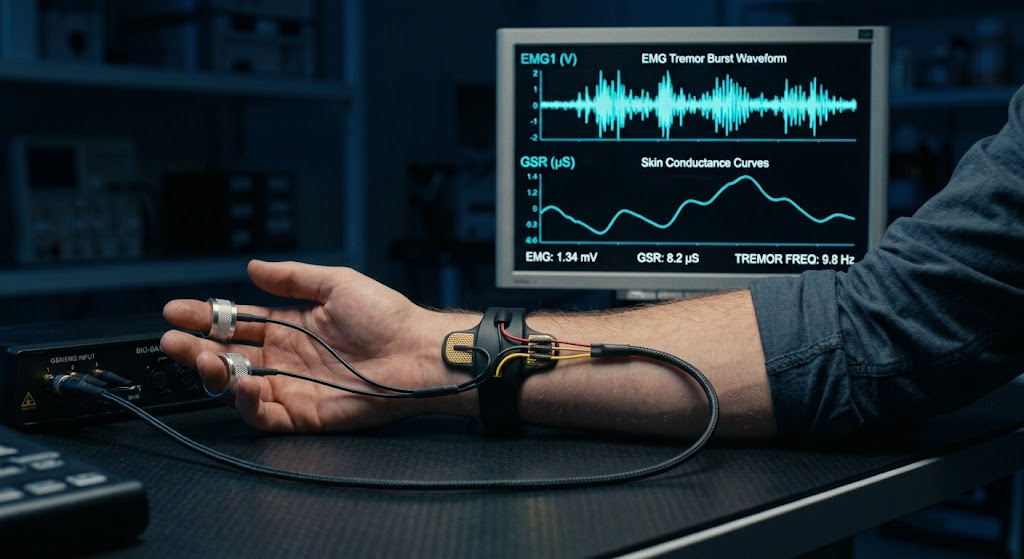
Wearable Forearm Sensor Cuff: Tremor & Autonomic Stress Biomarkers
Cardiovascular Hemodynamics & Electromechanical Waveform Profiling
Georgia Institute of Technology
Dual-channel synchronized biopotential (Lead II) and infrared photoplethysmography (PPG) profiling. Quantified pre-ejection latency, autonomic vasomotor response, and age-dependent arterial stiffening (SI: 5.61 → 12.80 m/s) across subjects aged 9–86.

Cardiovascular Hemodynamics & Electromechanical Waveform Profiling
Medical Image Detection & Classification (RSNA Benchmark)
Radiological Society of North America (RSNA)
Deep Learning architectures (Vision Transformers & ConvNeXt) in PyTorch for automated multi-label detection of 12 knee anomalies in volumetric MRI, achieving 0.936 Macro ROC-AUC benchmark.
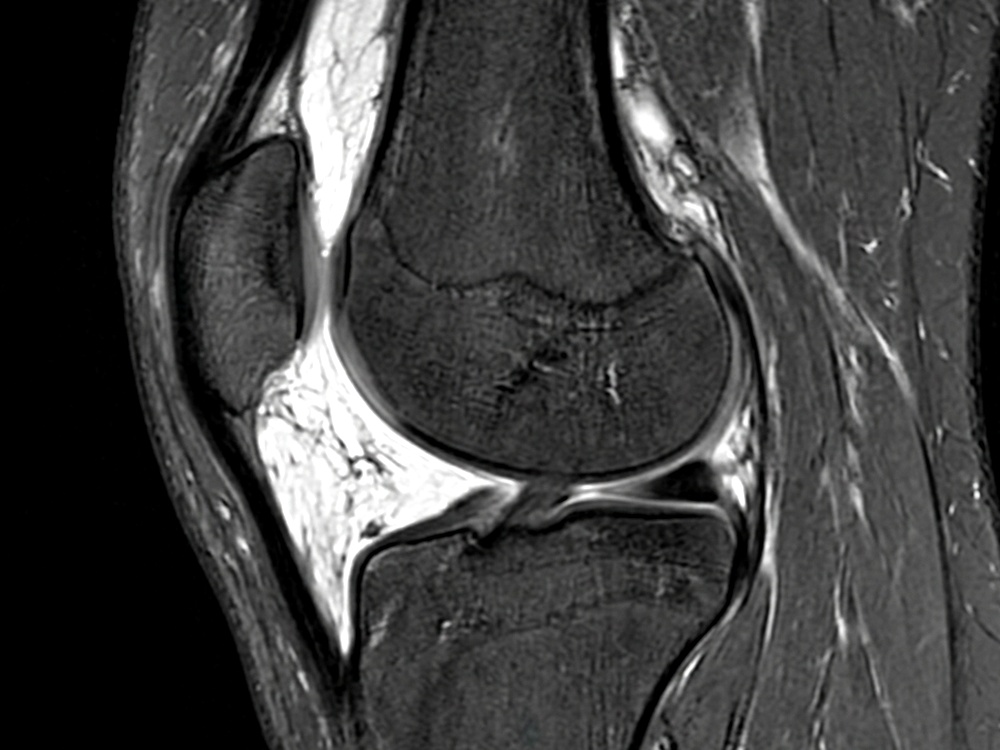
Medical Image Detection & Classification (RSNA Benchmark)
Pulsatile Womersley Flow Simulation in Carotid Geometry
Universidad Carlos III de Madrid
Numerical resolution of Navier-Stokes for unsteady pulsatile flow across Womersley numbers (0.1 to 30), validating against physical pulsatile flow experiments.
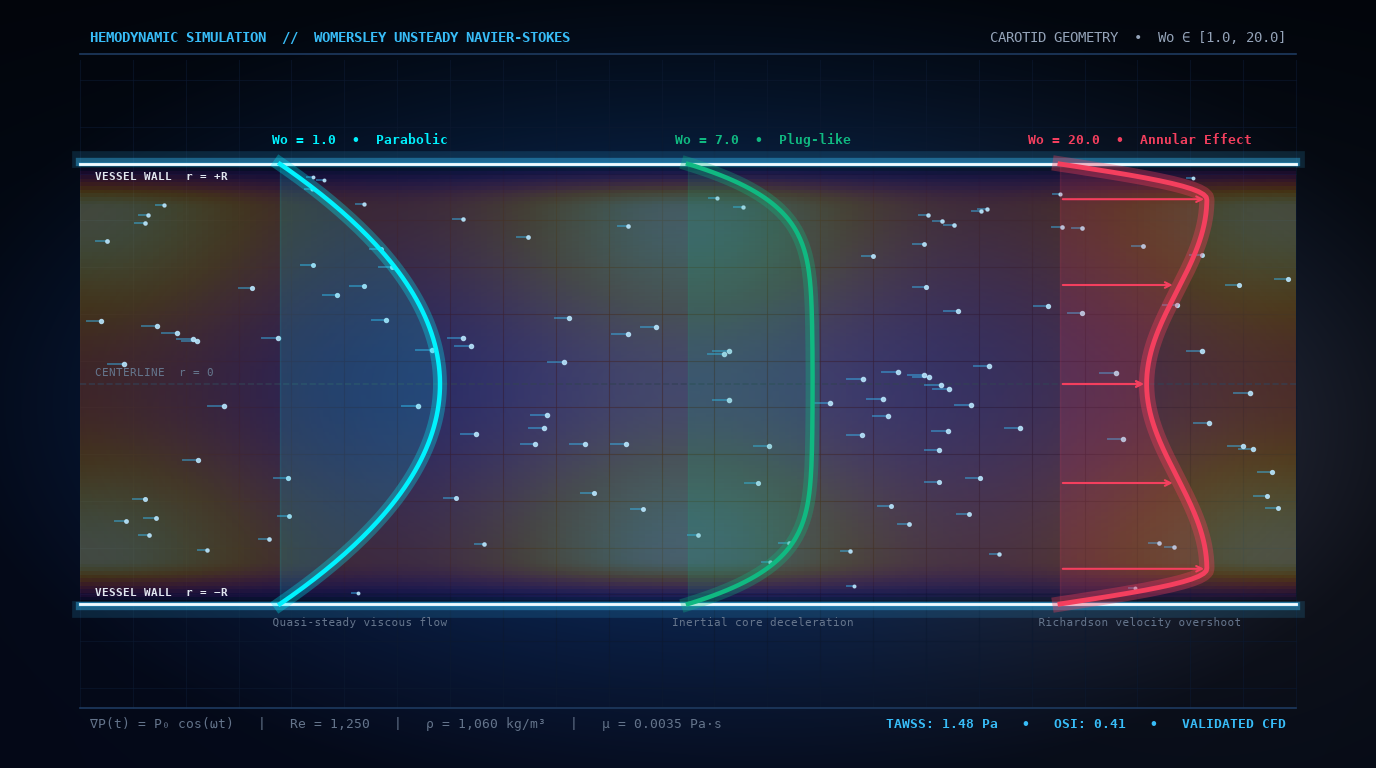
Pulsatile Womersley Flow Simulation in Carotid Geometry
Dual-Pathway Targeted Cytotoxicity in Glioblastoma (U87EGFP)
Georgia Institute of Technology
In vitro oncology research evaluating ferroptotic (Erastin) and pro-oxidative (Ursolic Acid) dual-pathway cytotoxicity in U87EGFP glioblastoma. Quantified dose-response curves (IC₅₀ = 0.50 mM), additive tumor kill (~40%), and apoptotic morphology via 96-well spectrophotometry.