Dual-Pathway Targeted Cytotoxicity in Glioblastoma (U87EGFP)
Synergistic & Additive Induction of Caspase-Mediated Apoptosis via Combined Ursolic Acid & Erastin
Overcoming Glioblastoma Therapy Resistance
Erastin (Ferroptosis Induction)
- Inhibits System Xc⁻ cystine/glutamate antiporter.
- Depletes intracellular Glutathione (GSH).
- Suppresses GPX4, triggering iron-dependent lipid peroxidation.
Ursolic Acid (Pro-Oxidative Stress)
- Inhibits TGF-β signaling (blocks EMT & angiogenesis).
- Elevates intracellular Reactive Oxygen Species (ROS).
- Promotes mitochondrial outer membrane permeabilization.
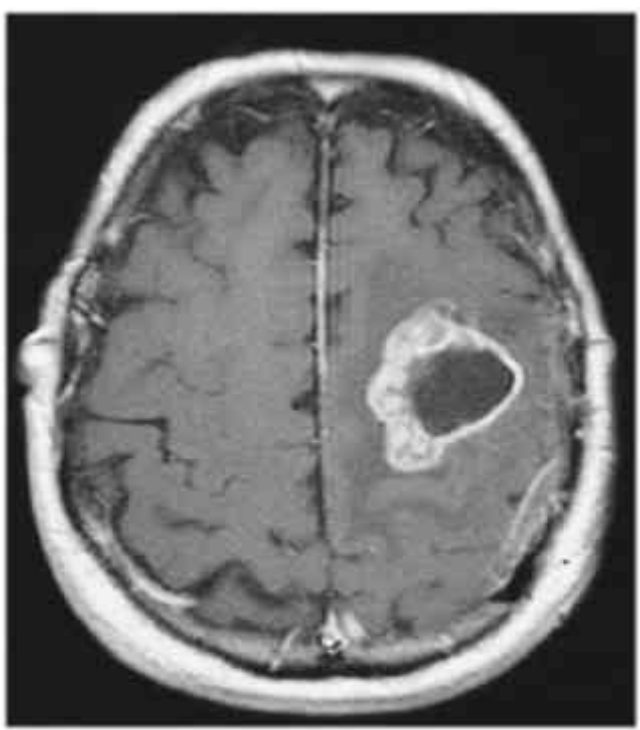 Axial T1+C MRI: Glioblastoma Multiforme
GBM remains an aggressive, lethal brain tumor (<5% 5-year survival) highly resistant to conventional pro-apoptotic regimens.
Cellular Toxicity & IC₅₀ Determination
- Quantify U87EGFP toxicity of Erastin and Ursolic Acid (UA) individually.
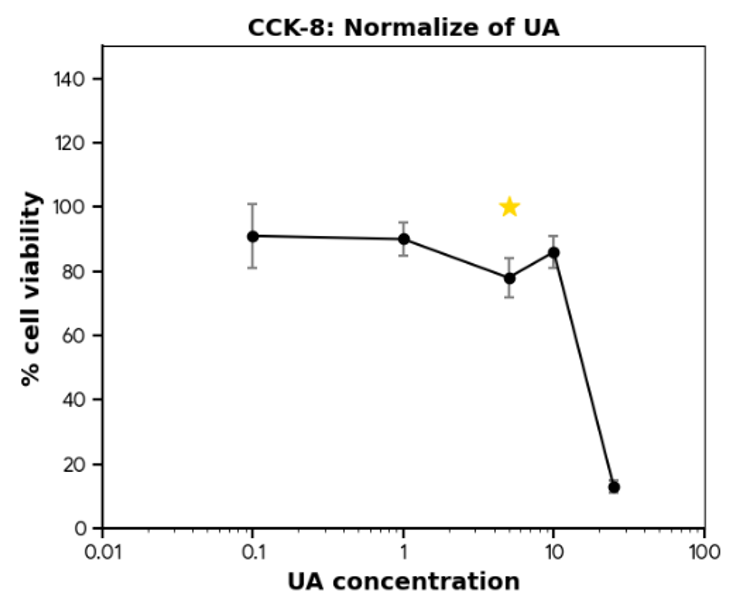
- Establish monotonic IC₁₀ (0.1 µL), IC₂₅ (1.0 µL), and IC₅₀ (5.0 µL) for Erastin.
- Determine optimal fixed working dose for Ursolic Acid (5.0 µL static treatment).
Dual Interaction & Morphological Impact
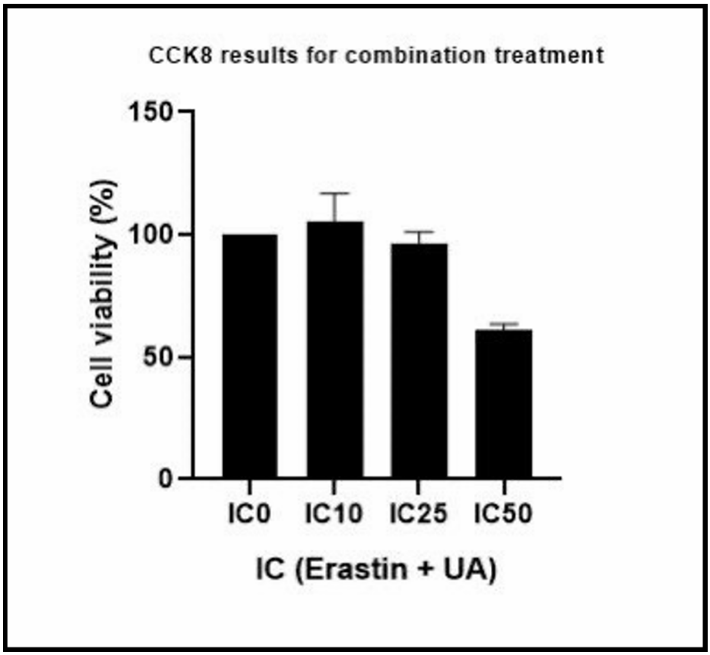
- Test fixed UA (5.0 µL) combined with escalating Erastin (IC₁₀, IC₂₅, IC₅₀).
- Quantify cell viability via CCK-8 assay: dropped to ~60% at IC₅₀ combination.
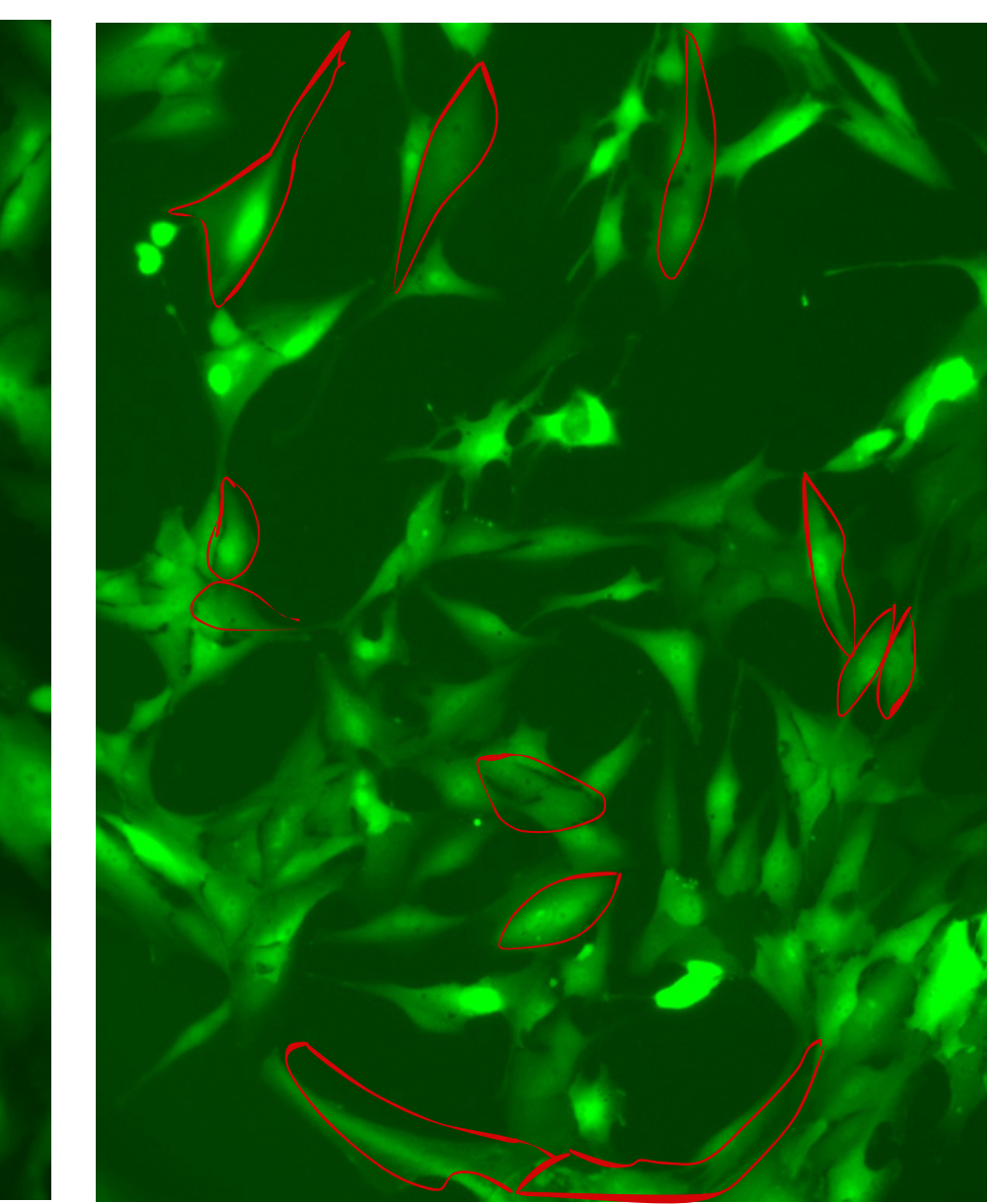
- Characterize apoptotic phenotype vs. cobblestone control via EVOS fluorescence.
EVOS Fluorescent Microscopy: Control vs. IC₅₀ Dual-Treated U87EGFP
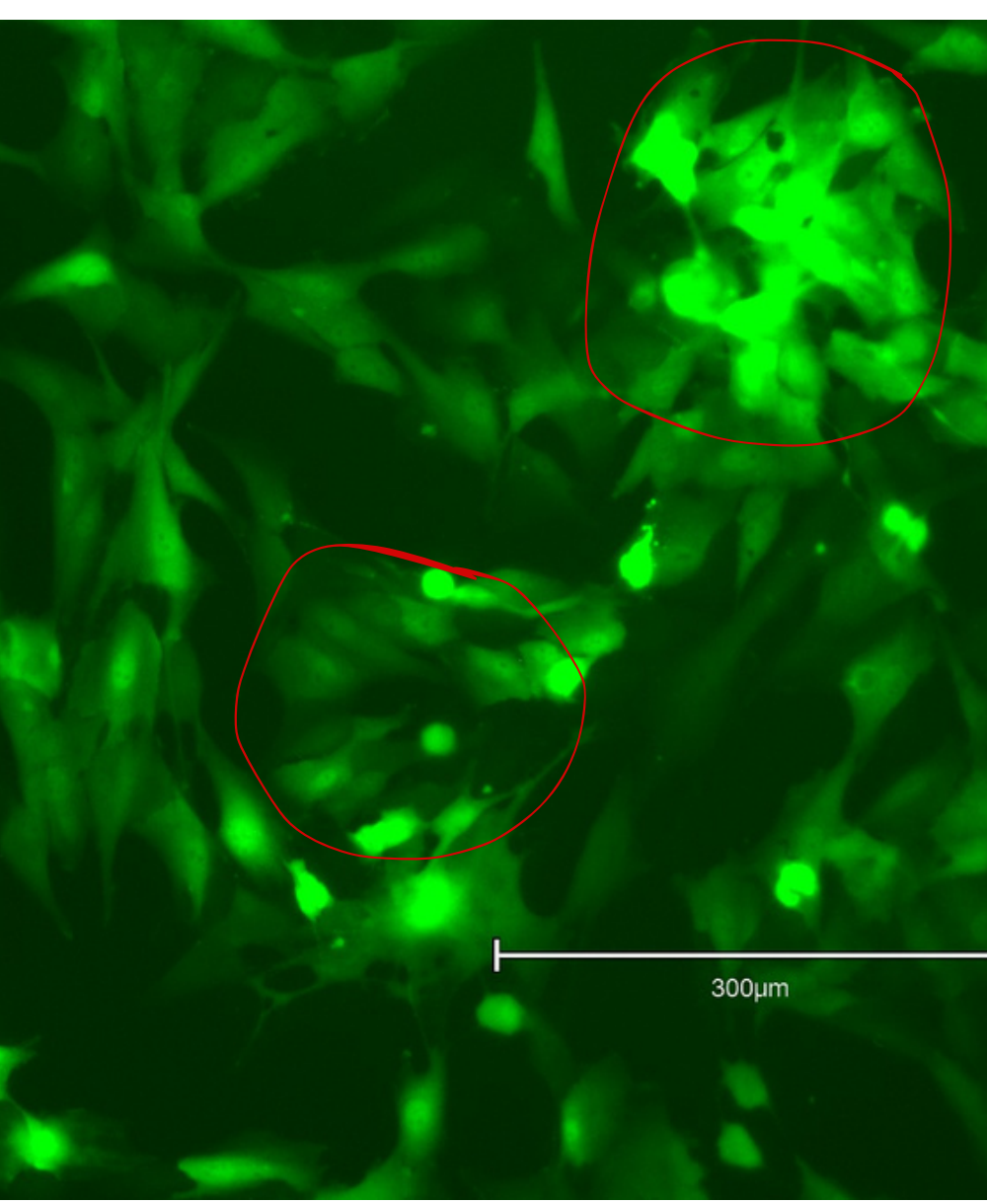
Cells maintain a rounded shape and organize in dense clusters with continuous cytoplasmic membranes and healthy nucleolar organization.
Distinct apoptotic markers: visible shrinkage of the nucleus, central fragmentation spots, cytoskeletal collapse, and sharp membrane bulging/blebbing.
CCK-8 Colorimetric Dose-Response & Interaction Curves
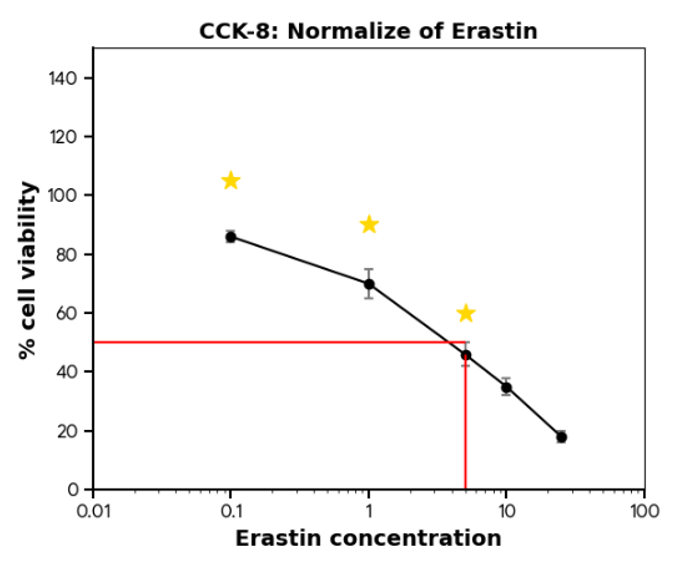
Clear Monotonic Apoptotic Profile
Consistent with literature, Erastin demonstrated a clear, concentration-dependent reduction in U87 cell viability:
96-Well Plate Micro-Titration Explorer
Hover or click any well to inspect concentration, OD 450 nm, viability %, and phenotype.
Dense cobblestone monolayer, intact membranes.
Materials, Reagents & Laboratory Methodology
Cell Line & Reagents
Assay Kits & Readout
Optical & Lab Equipment
Additive Cytotoxicity as a Therapeutic Strategy in GBM
Combined Erastin and Ursolic Acid treatment induces an additive reduction in U87 glioblastoma viability to ~60%. This bypasses the typical apoptosis resistance of glioblastoma via concurrent System Xc⁻/GPX4 ferroptosis and pro-oxidative mitochondrial stress.
Future directions will directly confirm pathway markers using selective inhibitors (Ferrostatin-1 for ferroptosis and Z-VAD-FMK for pan-caspases) and repeat flow cytometry (Annexin V / Caspase 3/7) across multiple glioblastoma lines.